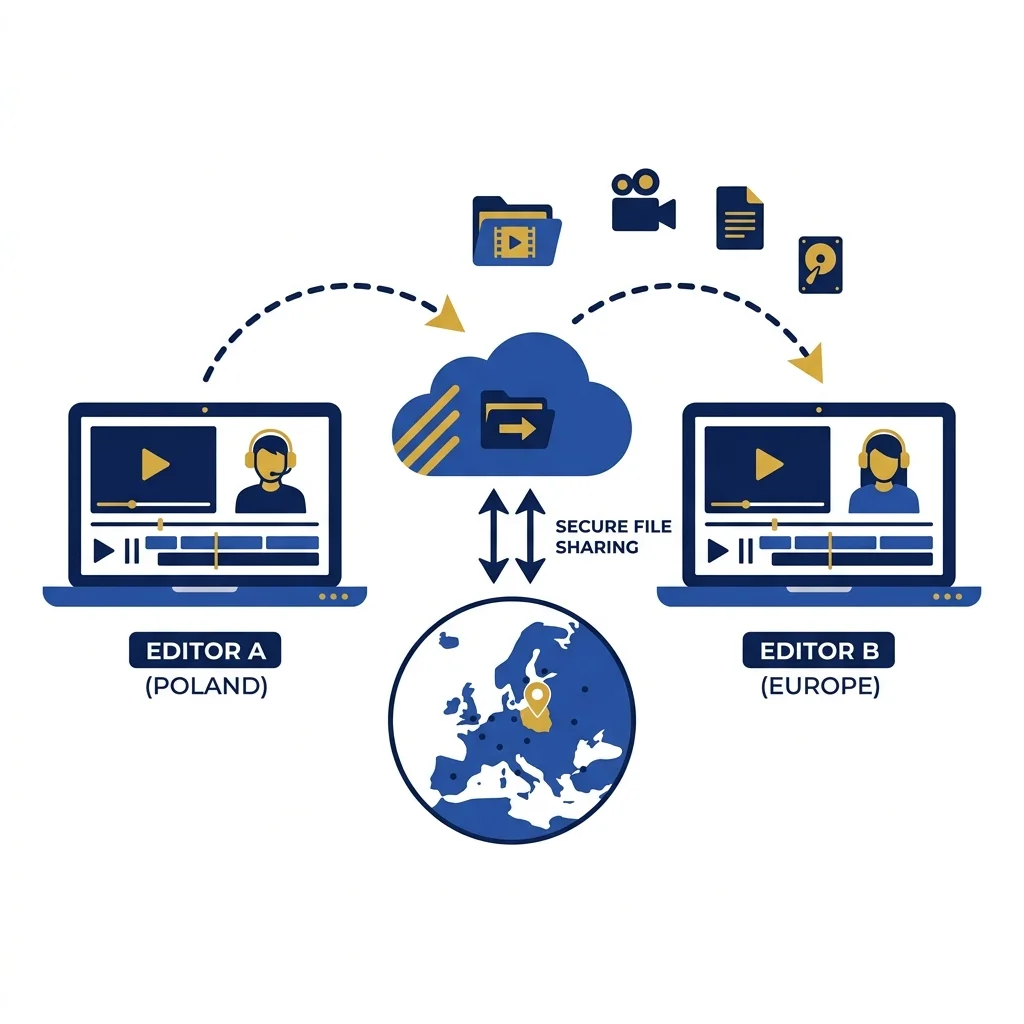
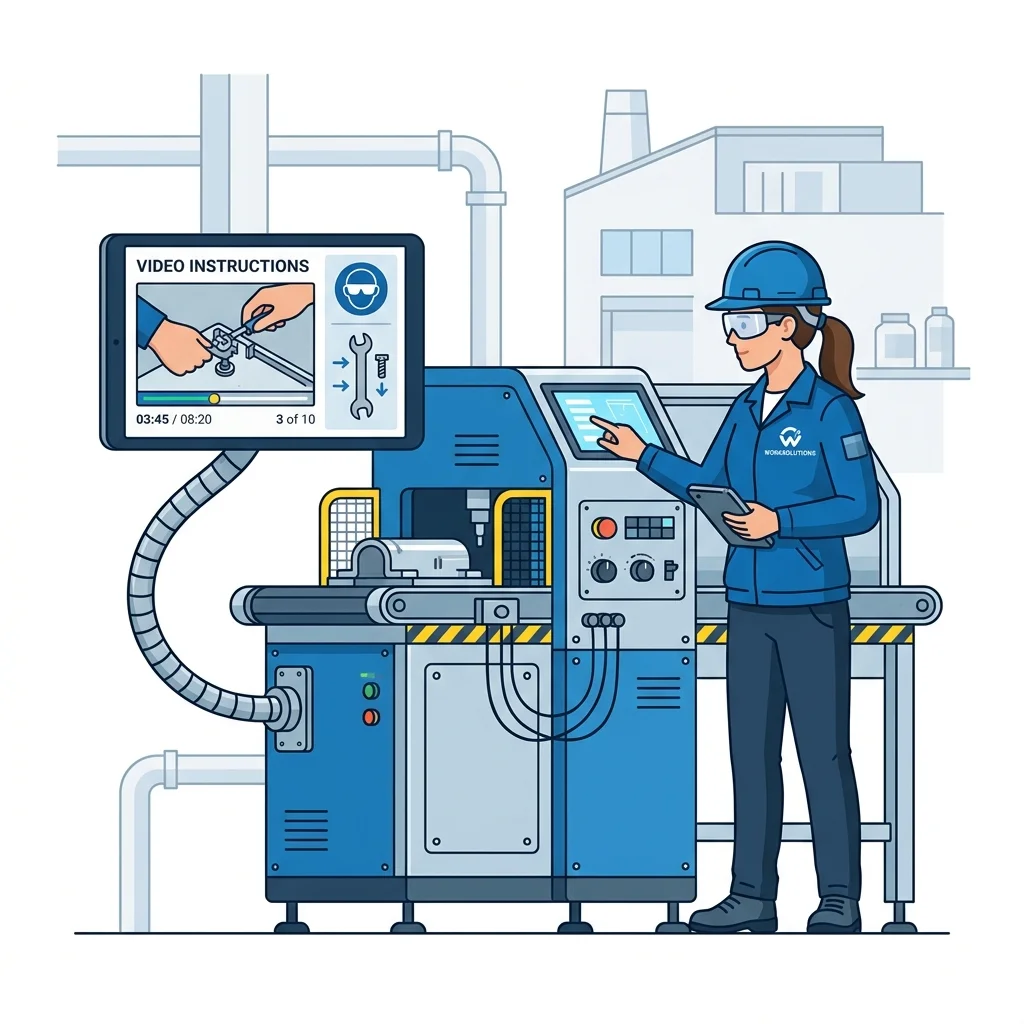
How to Record a Safety Video for Foreign Workers: The Role of Translation and Voiceover Localization
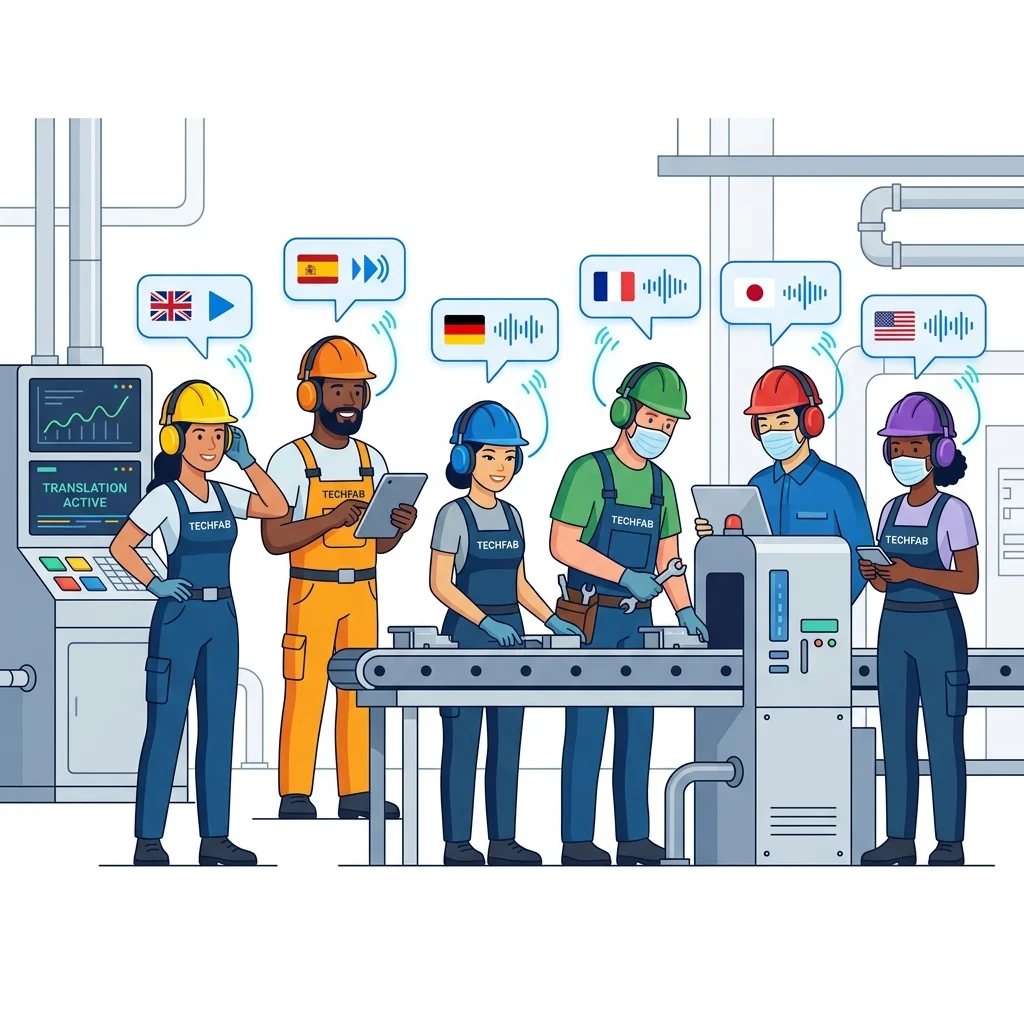
Poland has become a key manufacturing hub for global corporations, which means that more and more foreign workers — including those from Ukraine, Belarus, Central Asia, and Southeast Asia — are working on factory floors and in warehouses. One of the greatest challenges for HR and EHS (Environmental Health and Safety) departments is ensuring that all employees, regardless of their country of origin, fully understand safety guidelines. Traditional training sessions conducted solely in Polish or English are often ineffective. The key to solving this bottleneck is a dedicated safety induction video for foreign workers, crafted with professional translation and voiceover localization.
💡 Key Takeaways (TL;DR)
- Language barriers on the production line represent direct safety hazards and risks of costly operational mistakes.
- Simply adding subtitles to a safety video is insufficient — a professional voiceover recorded in the workers' native language is critical.
- Localization goes beyond words, encompassing cultural and graphical adaptations (such as translated on-screen text and warning signs).
- To learn more about implementing training videos on the factory floor, read our guide on [training and safety videos for factories in Lower Silesia](/en/blog/filmy-szkoleniowe-bhp-fabryki-dolny-slask).
The Challenge: Language Barriers on the Production Line
Workplace accidents are most likely to occur during the first few months of employment. If a new international worker fails to understand safety instructions due to limited proficiency in Polish or English, the risk of an incident spikes dramatically.
Paper training materials translated using automated online translators often contain serious terminology errors and are ignored by the workforce. A multilingual safety video communicates knowledge in an unambiguous, dynamic, and engaging way.
Key Components of Professional Safety Video Localization
Creating an effective safety video for international workers is a process significantly more complex than simply translating a transcript. At Sema Studio, we divide this process into key execution areas:
1. Professional Voiceover Localization
Listening to instructions in one's native tongue builds trust and guarantees that critical safety protocols are retained.
- Native Speakers: We exclusively hire professional voiceover talent who are native speakers of the target language (e.g., Ukrainian, English, Georgian, Uzbek, Nepali, Hindi).
- Terminology Matching: We cross-reference translations with your plant's production engineers and EHS specialists to ensure the terminology matches the actual jargon used on your shop floor.
2. Translation of On-Screen Graphic Elements
Most safety induction videos feature animations, text overlays, and footage of real warning signs on the factory floor.
- All key texts appearing on screen (such as lower thirds, warning pop-ups, and safety slogans) are replaced during post-production to match the specific language version.
- We ensure high-contrast, legible typography so that information remains easy to read, even on smaller screens like mobile devices used for onboarding.
3. Versioning (Dedicated Video Files)
Instead of delivering a single, cluttered video file with multiple subtitle tracks, we provide separate video files for each language group. This simplifies distribution — the recruiter or safety officer runs the exact video version the new hire needs.
Case Study:
A multinational logistics group operating a distribution center near Wroclaw employed nearly 400 workers from Central Asia and Ukraine for the peak autumn-winter season. Despite conducting safety training in Polish with an interpreter, the rate of minor incidents (such as improper pallet jack handling and missing PPE) rose by 25%.
We produced a 10-minute safety induction video, filming on site at their actual warehouse. The video was dubbed by native speakers in Ukrainian and Uzbek, and all key on-screen instructions were duplicated graphically.
The number of safety incidents dropped by 70% within the first three months of implementation. Furthermore, the duration of in-person safety briefings was cut in half, saving dozens of coordinator hours.
Managing Budgets for Multiple Languages
The most capital-intensive element of video production is filming on set. Local language versions are developed during the post-production stage, which means adding another language is only a fraction of the initial project cost:
- We film the video assets on the factory floor only once.
- We translate the script and record additional voiceover artists in a sound studio.
- We render separate language versions with localized on-screen graphics and audio tracks.
This approach delivers a comprehensive tool for your entire workforce without multiplying your production budget.
Frequently Asked Questions (FAQ)
Which voiceover languages do companies in Poland select most frequently?
Currently, the most popular package for factories in Poland is: Polish + Ukrainian + English. However, we are increasingly producing versions in Georgian, Uzbek, Nepali, and Spanish.
Is it better to use subtitles or voiceover dubbing?
We strongly recommend voiceovers (dubbing). Production operators are manual workers who need to observe hand movements and machinery on screen. Reading subtitles distracts their attention from the vital visual message.
Can we purchase additional language versions in the future?
Yes, absolutely. We archive all source project files. If you hire a group of workers from Colombia next year, we can record a Spanish voiceover and output a new version without needing to reshoot inside your factory.
Do you also translate video Standard Operating Procedures (SOPs)?
Yes. For video SOPs, we often apply a "minimal text, maximum visual" design where most instructions are conveyed through clear imagery, keeping voiceover to a minimum. This further simplifies and lowers the cost of localization.
Do you want to create a safe working environment for employees from all over the world and reduce accident rates at your facility? Call us at +48 663 393 700 or write to info@semastudio.pl — we will deliver a professional, multilingual safety video tailored to your workforce structure.