Modern Safety Induction Video — Why PowerPoint Slides Are a Risk to Your Factory

Modern Safety Induction Video — Why PowerPoint Slides Are a Risk to Your Factory
Initial safety training for new employees, contractors, and visitors is a legal obligation for every industrial facility. Unfortunately, in most cases, this training looks exactly the same: a group of people sitting in a conference room, staring at 50 PowerPoint slides filled with small text and legal codes.
The result? Low focus, boredom, and quickly signing the attendance sheet without actually retaining the information. In the real world, where a second of inattention on the production floor determines health or life, this training format is a massive risk—both for the workers and for the factory management.
💡 Key Takeaways (TL;DR)
- PowerPoint presentations fail to hold attention, resulting in poor safety protocol retention and higher accident risks.
- A professional Safety Induction Video shows emergency procedures and hazard zones in a realistic, memorable way.
- Dedicated safety videos for visitors and contractors cut gate entry procedures from 30 minutes down to just 5 minutes.
- Having a professional training video serves as strong evidence of due diligence for the company in the event of an audit or legal dispute.
Slides vs. Reality: Legal and Operational Risks
Workplace accidents generate massive costs: production line stoppages, equipment damage, insurance hikes, and investigations by labor inspectors and prosecutors. In the event of an accident, the first things inspectors check are the safety training records.
If the training was based on reading a dry presentation, the injured employee could argue that the instructions were unclear and the risks were not properly illustrated.
Safety videos eliminate this ambiguity. They capture the actual hazards present in your specific plant, demonstrating:
- Rules for navigating transport lanes and blind intersections with forklifts.
- Correct LOTO (Lockout/Tagout) procedures before machine maintenance.
- Behavior protocols in explosion hazard (ATEX) or high-noise zones.
- Proper selection and wearing of personal protective equipment (PPE).
Workers see the exact machines and zones where they will be working. This cannot be communicated with generic stock images on a slide.
Business Benefits of Implementing Safety Videos
1. Real Safety and Drop in Accident Rates
The most important benefit is saving lives. Dynamic editing, drone footage, 3D overlays showing danger zones, and staged scenarios simulating errors ensure that workers actually remember the safety rules.
2. Saved Time for HSE and HR Teams
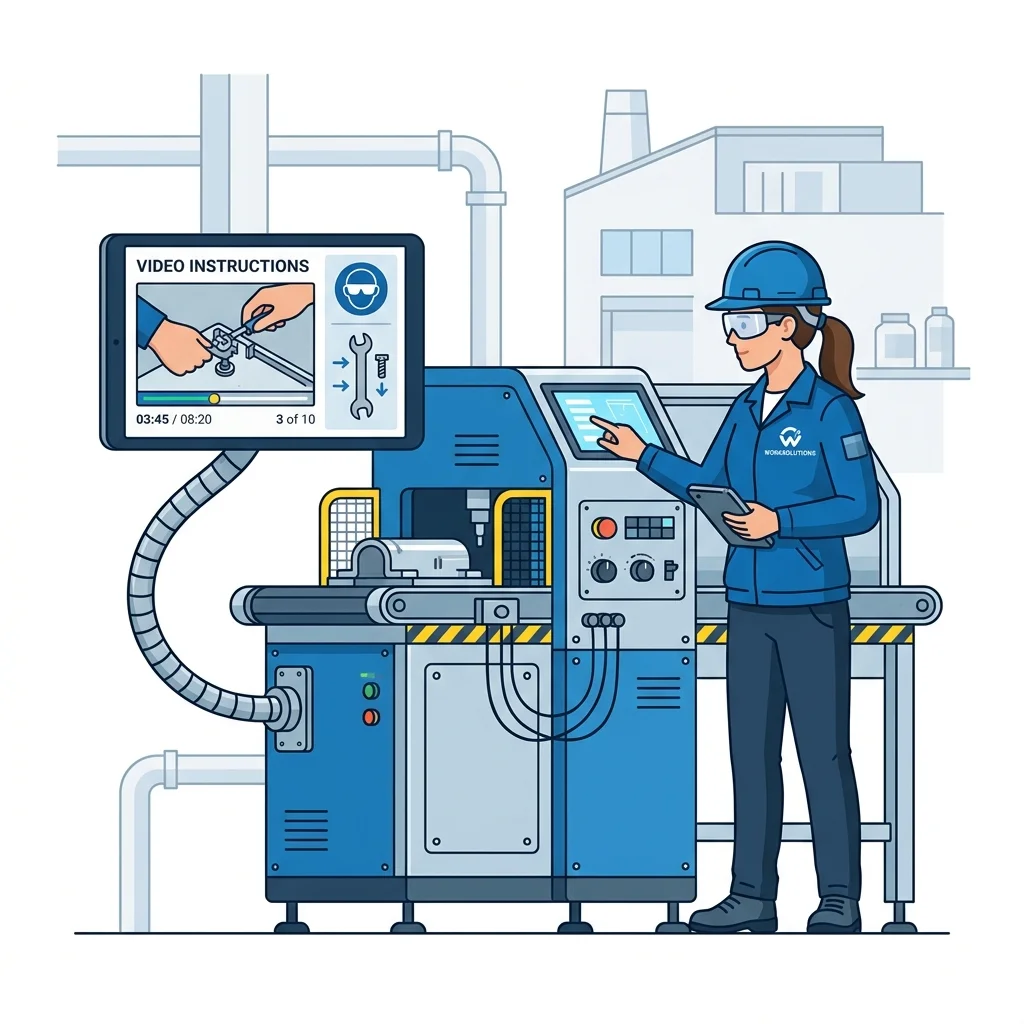
In factories with high staff turnover or frequent external contractor visits, HSE officers spend dozens of hours every month repeating the same presentations. Replacing this with a video automates the process. A visitor or contractor can watch the video on a tablet at the reception desk, or complete the training online before arriving at the facility.
3. Standardization and Zero Human Errors
A trainer can have a bad day, skip a slide, or shorten a presentation due to lack of time. A safety video always delivers 100% of the critical information in the exact same, precise way.

What Should a Professional Safety Induction Video Look Like?
A good safety video should be modular and customized for different target groups:
- Visitor Video (approx. 3-5 minutes): Focuses on the basics—evacuation routes, do-not-touch rules for machinery, mandatory vests and glasses, and photography policies.
- Contractor Video (approx. 10-15 minutes): Expanded to cover high-risk tasks (working at heights, hot work permits, confined space entry procedures).
- Station-Specific Video (Modular): Detailed safety procedures dedicated to specific lines or technologies (e.g., crane operation, chemical handling protocols).
Realism is key. Showing real machinery from your facility and involving actual employees builds respect for the topic much better than using stock actors in spotless, brand-new overalls.
Case Study:
A large wood processing plant averaged 14 minor accidents and near-miss incidents annually, mostly involving external service contractors. Traditional safety training at the entry gate took 40 minutes, causing logistics delays.
We created a two-module safety video. A 4-minute module for drivers and visitors translated into 4 languages played on multimedia kiosks at the gate, and a 12-minute module for contractors featuring a short comprehension test.
Visitor registration and safety onboarding time dropped from 40 to 8 minutes. In the first year following implementation, safety incidents fell by 70%, and the plant maintained its ISO safety certification without any compliance issues.
Safe Video Production Practices
As a video production company specializing in industrial settings, we know that a film crew on a factory floor must be a role model for safety. During safety video shoots, our operators work closely with the client's HSE inspectors. We review every angle to ensure no unsafe behaviors are captured, maintaining the educational integrity of the safety film.
Want to improve safety, eliminate gate delays, and protect your company from legal risks? Call: +48 663 393 700 or email us at info@semastudio.pl — we will create a professional, effective safety video for your company.